
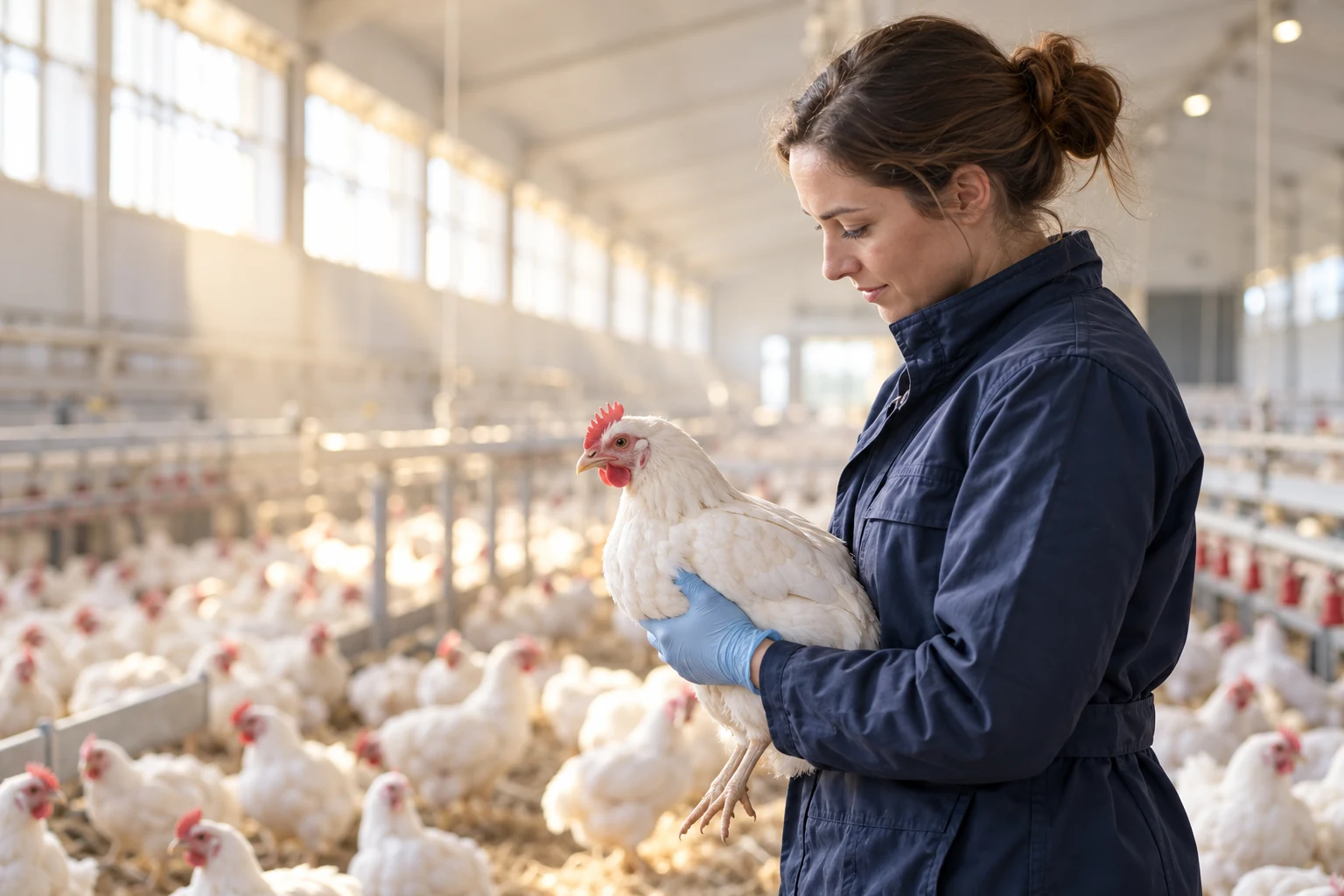
Observe the group and the individual
Routine observation helps identify changes in appetite, movement, body condition and behaviour. A problem affecting several animals may call for review of feed, water, housing or recent introductions as well as individual clinical examination. Record the pattern and share it with the herd veterinarian.
Keep prevention practical
Maintain clean water, appropriate nutrition, suitable housing and a plan for introducing new animals. Discuss vaccination, parasite monitoring and disease risk with the attending veterinarian. A useful plan is one that farm staff can follow consistently and review as the herd changes.
Treat parasite control as a management programme
For sheep and goats, parasite management combines veterinary assessment with sanitation, pasture management and attention to animal condition. Faecal testing can support investigation and treatment decisions. Repeated deworming without supporting management can encourage resistance; a calendar alone is not a complete programme.
Make treatment traceable
Individual or group records help everyone understand what was given, why, when and by whom. For food-producing animals, include the applicable withdrawal instructions and release date. Product suitability must be checked for the specific species; an animal pictured on another pack is not a substitute for the approved leaflet.